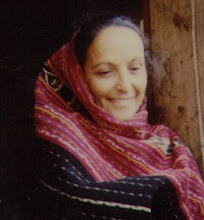
Interview with Paula da Costa in Bissau broadcast by the BBC World Service in Portuguese on 20 October 2002 and reproduced in the Correio de Guiné Bissau of 24/10/2002.
Ms da Costa, a Portuguese development worker who previously worked in the country for six years in the post-independence period, has been in Guinea Bissau since September 2001 as Technical Advisor to the Women’s Rights Project of Guinean NGO Sinim Mira Nassiqué (from the Mandinga meaning “Look to the future” and normally abbreviated to SMN). SMN has been working since 1996 on the problems associated with female excision in Guinea Bissau and has organised a number of Alternative Fanados (fanado being the initiation rite for young boys and girls and which traditionally has included female excision among various ethnic groups in Guinea). This year for the first time, 36 fanatecas (women who traditionally carry out the excision) formally renounced the practice and handed over their ritual knives to SMN.
- BBC: The combat of female genital mutilation (FGM) is having significant success in Guinea Bissau. To what do you attribute this?
Paula da Costa: The important issue which arises in Guinea Bissau, and this has been the position of SMN since 1996, is that it is not so much a question of combating FGM as providing an alternative. Our success in this work has come from the fact that we have presented an alternative. What this means in practice is that we have a viable proposal for the communities involved which is that they maintain the initiation rituals but without the component of excision. SMN has been working along these lines since 1996, interrupted by the civil war but resumed soon after. So our work has involved campaigns against FGM, awareness campaigns for the general public, conversations with the people in the rural villages involving the local mulheres e homens grandes (elder women and men), conversations with religious leaders, all of which culminate in the holding of alternative fanados with the acceptance and participation of local communities. This year we put on three of these in different parts of the country, Buba in the South, Farim in the North and Gabu in the East. These three fanados involved the participation of 180 young girls who were initiated into adulthood without excision. In addition, for the first time, we were very pleased to have 36 fanatecas willing to hand over their ritual knives to SMN. This was a historic moment here in Guinea Bissau, a very unique moment, being the first time in history the these women have given in their knives. We very much hope that next year we will have many more willing to make this commitment.
The profession of exciser is one that is respected here and has high credibility in the local communities. They are women with considerable personal power in local society and the knives are passed down through generations as an inheritance. We do not have an overall figure for their numbers at this moment. A survey was carried out before the civil war but the results were lost during the upheaval of the period. We are in the process of carrying out an assessment of the number of fanatecas at national level but I can say that we are talking about some hundreds of women involved in these activities. SMN has in fact already begun the work of retraining these women for alternative socio-economic activities. This is essential because once they have surrendered their knives they lose their personal earning power. They have always been paid by the girls families for their work as excisers. So we are planning a major press conference in the capital on 7 November next to convince both governmental and international institutions, as well as NGOs, that they should give us practical support to achieve the economic redeployment of these women. The handing over of their knives is an act of great courage and dignity which must not go unrecognised. We have a duty to stand by these women and value their courage. We really hope that we will get the support of those we invite so that these fanatecas can be seen to maintain their position within their communities and that we can build on this foundation for next year so that we can have more and more fanatecas handing over their knives as has already been seen in Guinea Conakry and other countries.
- In spite of this success, then, the battle is far from over, it would appear; there is still much to be done …
All projects which go against traditional practices are in fact very complex and take a considerable time to bear fruit. The campaign against excision is one which will take many years. SMN has been working on the issue with the Islamic communities here since 1996; we need to convince them that excision is not part of the Koran’s teachings.
The Koran is a book which is both sacred and humanist and which supports a struggle for human rights and as such one would not expect to find excision advocated there and in fact it is not mentioned. What has really happened is that these particular communities practised it before being islamicised and it has continued on down through the centuries. Many people claim that excision is part of Islam but in fact it is not. However, it is a tradition which goes back thousands of years so naturally it is not in three or even ten years that we are going to do away with it just like that. We are just at the beginning and to really make progress we are going to need the support of the whole society: citizens, organizations and politicians because this is not the struggle or the work of one NGO, it is work which needs to be seen through at national level and we really hope this is going to happen because we are aware that there is a very long haul ahead.
- Apart from the excision aspect, is your alternative fanado different in any other respects from the traditional ones?
The alternative fanado has more or less everything that the traditional ones have. You may ask: what exactly is a traditional fanado? Well, it plays a very important role in the communities as a rite of passage into adulthood. The girls on a fanado receive informal education relating to a variety of community matters: they are taught how to address their elders and show appropriate respect and they learn some elements of informal literacy, rules of behaviour, knowledge of traditional practices particular to their ethnic group (including magic rituals), how to protect family members and how to relate to their family spirits.
All of the traditional mysticism is maintained in an alternative fanado while at the same time we aim to provide some elements of additional value. So, in addition to the traditional wisdom and behavioural rules which we believe should be preserved, the children receive some supplementary training. Girls learn embroidery, lace-making, learn about hygiene, AIDS, malaria. There are trained staff who teach these to the girls. We also include some training on Children’s Rights. So, basically these are the aspects we believe make a real contribution to making the fanado something of value today.
The only things we exclude are excision and violence against the children, I say this because sometimes a little violence may be included as part of preparation for adult life. We believe that this is not necessary or appropriate in the modern world. So what we have tried to do is to take what was good in traditional practice and adapt it for our times. We believe our alternative fanado is unique in all the continent of Africa and that it could be taken up by other countries of the sub-region or other parts of the continent so that between us we can find the best strategies to make the transition from tradition to modernity.
- Could you mention some of the harmful aspects of excision to the women who undergo it?
FGM has short, medium and long term consequences. In the short term, it can provoke very serious haemorrhaging which brings about the death of many girls. AIDS or Hepatitis B infection can also result due to the same blade being used for the excisions.
Also during puberty the girls often have considerable health problems of a uro-genital nature. Sex life is also complicated by the removal of the clitoris, a fundamental part of women’s sexu ality.
Later, when they come to give birth they will have a lot of complications because their natural elasticity is very much reduced. Many times either the mother or baby dies during birth or the baby is born with considerable suffering, provoking additional problems for any subsequent births. So basically excision is a major public health risk and that is how it should be addressed.
- The girls who have participated in an alternative fanado constitute an outsider group and could even be the subject of exclusion within their own community. What has SMN done in this regard?
We are very much aware that in carrying out the alternative fanado we run the danger of creating an excluded group because within the Muslim communities those girls who have not been excised are seen as being of less worth because an excised girl can make a good match in marriage, she can prepare her husband’s food and attend the mosque. Once a girl is initiated without excision certain aspects of life in her community are forbidden her and this can bring problems later on. For this reason there is always the danger that the families will feel obliged to have the girls excised at a later date to be able to make a good marriage and be able to carry out the duties of a good Muslim wife. The grand task facing us now, in addition to the alternative fanado itself and immediate follow-up and to the conversion of the fanatecas is precisely this: to work at local community level so that this potentially excluded group come to be seen as “whole women”, women who have strength and presence and who contribute to the family well-being. This is the really important aspect of the follow-up of these girls that we aim to do over the next 2 or 3 years. We have given this a lot of thought and are presently formulating our strategies.
- You are involved in very sensitive areas which relate to habits enshrined in custom. Are you not likely to run into pockets of organised resistance?
Of course. Any challenge to tradition has to confront this situation – the more you achieve the more opposition you are likely to encounter. As you might expect, we have come up against some resistance, but our campaigns in the North, East and South having been very persistent and gradual in their approach, we have sat down and talked with the people, showing them the consequences of excision. The problem has been that ordinary people in general have been unaware of the real consequences and dangers of FGM. Even when there have been deaths of girls during excision there have always been explanations – the cause was not the excision itself but that spirits came and took them away and people do not make a direct causal link between excision and the death. But now people have this information and also the information about the consequences for the future of their daughters. This all takes a lot of time, there is indeed resistance but we quietly go ahead dealing with this resistance.
- Have you noticed that any one region is particularly resistant to your work?
No specific region really. There are examples of resistance in all areas, North. South and East. To us there are no major areas of resistance, more small pockets of resistance which we approach by talking to people and resolving issues. Many of our animadoras (community workers) in the field are women who have themselves undergone excision so they know very clearly what they are dealing with. They are women who are working with other women so that ‘s pretty much how we get things done.
- Any final thing you would like to say that hasn’t come up so far?
I would really like to appeal to all international organizations to support this project because when we talk about Women’s Rights or Children’s Rights we cannot forget about the problem of excision. This is a public health problem in Guinea Bissau and Sinim Mira Nassiqué is tackling this as a non-governmental organization; we are supported in this work by WFD, a German NGO, and this year we have also received support from the Gulbenkian Foundation in Lisbon who helped us considerably in keeping our campaigns running. In addition we have had some support from Radda Barna, Senegal and some assistance from UNFPA and UNICEF in Bissau but we would appeal to all international organizations to support this work because that is the only way we will be able to be really effective in the fight against excision and prevent these terrible violations of Women’s Rights and Children’s Rights.